

● VOLUME 36 · OCTOBER 22, 2026
No Huddle: Inside PodPlay, the Operating System Behind 300+ Racquet Clubs
|
||||||
|
||||||
|
||||||
|
A New Way to Invest in Athletes: Zach Kurtz × Agentiq | In The Arena Ep. 1
A new YouTube show from No Huddle on the deals moving the industry and the founders, operators, and companies building what comes next.
|
||||||
|
On the episode
|
||||||
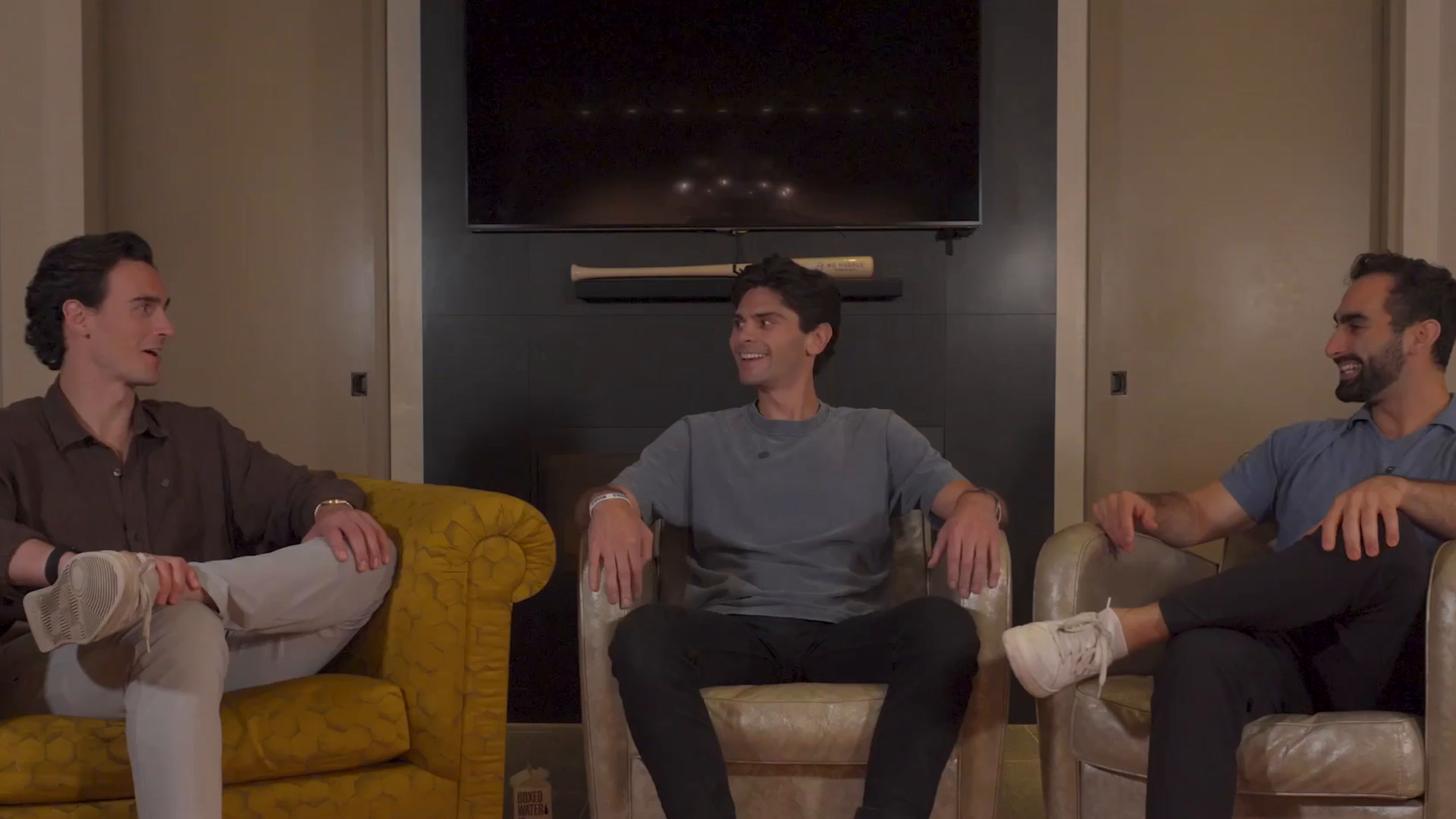
| With Sam Foley, founder of No Huddle, and Joey Lindstrom, national play-by-play broadcaster. Guest: Zach Kurtz, co-founder of Agentiq. | ||||||
|
||||||
| A No Huddle production. |

🎙 IN THE POCKET

How I am seeing the field across sports, media, entertainment, wellness and CPG
“The real anchors are the pickle and the padel.”
That’s David Gutstadt, founder of Ballers, talking to The Wall Street Journal this summer about the converted Philadelphia power plant I covered back in Volume 29. Gutstadt and team built a hospitality-driven club with restaurants, a gym and a members’ lounge, and the two sports that hold it all together are ones most Americans couldn’t have explained five years ago.
A few weeks ago I got a closer look at the business behind that shift. Ben Nichols has spent the last few years doing as much as anyone to grow padel and the industry around it, first through Padel 22, the sport’s first communications agency, and now through The 22, his advisory and community platform. His recent event in Long Island City at Brisas Cityview brought together all of the power players of this emerging global sport as it works into the US. I was able to meet investors, operators, founders and brands and hear where they see the industry heading. One of the more interesting takeaways for me is how brands are viewing these “emerging” sports as a new frontier for partnerships and a clear channel for growth. Two celebrity-backed brands were on the panel, Tom Holland’s BERO and David Beckham’s IM8, as well as Oku Energy, which we put to the Field Test in episode 3 of The Colosseum.
The fellas over on the Clubhouse (under Skybox - make sure you tap into what Brent and Jester are building there) have a great breakdown of this thesis. Brands see these sports as a native way to find a very engaged, curious audience.
Back to the racquet sports market though - let’s run the numbers:
Racquet sports participation went from 13.9% of Americans in 2020 to 20.6% in 2025, and seven of the eight racquet sports SFIA tracks grew last year.
Pickleball went from about 4 million players in 2020 to 24.3 million last year, with 4.5 million picking it up in 2025 alone.
Padel crossed 1 million American players in its first year in the SFIA data, and US courts have more than doubled since early 2025.

Source: International Padel Federation (early 2025), Padel Browser (late 2026), Marc Roura and No Huddle
The money has followed. In May, Apollo Sports Capital led a $225 million investment in Pickleball Inc., the new parent of the PPA Tour and Major League Pickleball, which also owns retail, court construction, tournament software and media and did $140 million+ in combined revenue last year. Tom Brady, LeBron James and Kevin Durant own MLP teams. Padel is a few years behind on the same curve… which is exactly why a room full of investors spent an afternoon in Queens learning it.
My guy - and a recent addition to the No Huddle channel - Marc Roura was in that room too, and his takeaway was one I have been thinking deeper on: “In the US, the conversation is shifting from how fast courts can be built to how full they can be kept.” Playtomic co-founder Pablo Carro broke down the data - US courts are filled less than half as much as courts in the UK (the No. 1 country in the world for occupancy). Marc compares a court to a hotel room: an empty Tuesday morning slot is revenue gone for good.
How will operators - especially in expensive real estate areas like NYC - find creative ways to get people on courts even when it’s just a weekday morning?
The demand side isn’t the problem. Playtomic found 92% of people who try padel come back to play again. What’s missing is everything that turns a first-timer into a regular: coaching, programming, leagues, a reason to keep a weekly slot. Courts can be built in months. Filling them every night of the week takes an operating system…
Meet PodPlay. The platform 300+ racquet clubs use to book, run and fill their courts. 👇
📺 THE WATCH LIST

PodPlay
A mini investment memo on the stars of tomorrow
The Company: PodPlay
The Business in a tweet: PodPlay is the operating system for racquet sports clubs. One white-labeled platform that runs the bookings, memberships, leagues, payments, court cameras, scoreboards and even the front door - allowing a club to operate with fewer staff, keep its own brand and turn every game into a replay its players want to share.
The 101:
Industry: SportsTech, Vertical SaaS, Venue Operations
Headquarters: New York, NY
Year Founded: 2023, as a subsidiary of PingPod. Standalone company since August 2025
Founding Team/Current Leadership:
Max Kogler - Co-Founder & CEO. Co-founded PingPod in 2020, the network of autonomous table tennis clubs where PodPlay's technology was built and field-tested. Then spun PodPlay out as its own company.
Ilya Rivkin - Co-Founder & CTO. Previously Head of Mobile at Clarity Money (acquired by Goldman Sachs). Previously at R/GA, where he built the Equinox and Nike+ Running apps.
Ben Borton - Co-Founder & CRO. Runs go-to-market and is the company's chief storyteller. Previously ran digital fund services at Figure Technologies and was PingPod's first outside investor.
The sales bench was built in 2026: Ryan Weinbach joined in January as Sales Lead from a FinTech platform and was promoted to Head of Sales six months later - also a pickleball pro. In August, Sue Ellen Mang joined as Director of Sales. She owns and operates The Courts LV, an eight-court pickleball club in Las Vegas, and was a PodPlay customer before she joined the team.
Employees: 37 FTEs
Fundraising Status:
Raised $8M Series A in October 2025, led by Frontier Growth, with Dave Pandullo joining the board.
The PingPod entity raised a $10M Series A in 2022 led by Sequoia Heritage (now HRTG)


If you’re interested in learning more or meeting the team, respond to this email or reach out to [email protected].
Business Model:
Recurring SaaS subscriptions priced per venue across four tiers:
Basic, Basic+, Pro and Autonomous

The upper tiers bundle in-club hardware: court cameras for instant replay and digital scoreboards, with door access as an add-on (included in Autonomous).
PodPlay buys the hardware, custom-configures it in its New York lab and passes the cost through to the club at setup. The subscription is the business.
PodPlay also offers add-on modules (Tournaments, Insights analytics, API access), which are also included in the upper tiers (or sold separately on the lower ones)
An emerging business line: the social media / virality angle - replays that carry the club's logo and/or sponsor placements.
Traction:

300+ clubs on the platform, up from 30+ venues at the public launch in November 2023. Clubs switching from other systems have brought 400,000+ customer accounts onto PodPlay. Customers include Pickleball Kingdom, CityPickle, DTL Sports Center, Performance Pickleball and St. Pete Athletic
2M players using PodPlay-powered club apps, which carry 13,500+ App Store ratings at a 4.91 average
2.1M+ instant replays served
70+ clubs signed up to run fully autonomous, with no staff on site. The company reports labor cost reductions of up to 66% at clubs using its autonomous features
Per the company’s press release: Revenue tripled YoY at the time of the Series A
Live across pickleball, padel, table tennis, tennis, pool, golf and cricket simulators, badminton, squash and some soccer, on every continent except Africa and Antarctica
Replay content runs through weekly franchises with the biggest names in the sport: Highlight of the Week and Blooper of the Week (with DUPR), ClipTHAT (with The Dink), Top 10 Amateur Pickleball Highlights (with The Kitchen) and Game Tape (with PB Vision).
PodPlay replay content has passed 35M+ views across Instagram, YouTube and LinkedIn from 572 trackable posts
Launched PodPlay Insights in July, an analytics layer with an AI Assistant that reads a club's own booking, membership and court data and returns prioritized, quantified recommendations

Deep Dive: A visit to any club has three distinct parts: before, during and after. Before you play there's discovery, invites, booking and payment. During, there's getting in the door, keeping score and the moments worth replaying. After, watch and share the highlights… and decide to come back. Most club software only owns the ‘before’. PodPlay’s value prop to clubs is clear: a club running all three on one system, with the cameras and scoreboards talking to the same app the player booked through, knows more about its customer and gives that customer more reasons to return.
Pros:
The club keeps the customer. Marketplace platforms trade a club's identity for access to players. The player books through the platform's app, and the platform takes a cut of every reservation. PodPlay goes the other way: white-labeling to the club's brand, the club's app and the club's data.
That trade gets more attractive the longer a club has been open and the more it cares about loyalty and memberships over one-off bookings. This is an industry bet just as much as a tech bet - the more players and demand, the better PodPlay will do.
The hardware creates a sticky customer. Cameras, scoreboards and access control are configured to each club's own system.
A competitor can try and undercut PodPlay on a booking subscription or scorekeeping, but replacing it means pulling the hardware off the walls too.
Replays as a ‘free’ distribution channel for the club. The proof is in the data: 2.1M replays and a "Go Viral" button that sends the best clips to PodPlay (and media partners). Leading franchises like DUPR, The Dink, The Kitchen and PB Vision are all synced up.
Every clip carries the club's logo, so a player sharing a highlight is free marketing, and a sponsor on the replay is new revenue for the club.
The labor math sells itself to an operator. 70+ clubs have signed up to run fully autonomous, with integrated door access and 24/7 remote monitoring. Fewer staff means longer hours without a bigger payroll. It also allows operators to staff only during high volume periods, while still giving customers who can go at 10am on a Tuesday the chance to play.
A go-to-market built on content and customers. PodPlay reached 300+ clubs mostly on inbound and founder-led selling. A seller who has run the product as an owner is a hard pitch to beat.
Strong investor base that knows the playbook. Frontier is a vertical SaaS specialist, and in its diligence noted "an exceptional level of customer passion for PodPlay." Insights is the first step in turning what PodPlay already records into revenue recommendations an operator can act on. This will be a huge lever for them.
Cons:
Hardware naturally can slow the install / ramp process, and will lead to more complexity for overall venue management (i.e. replacing technology or fixing specific cameras)
Industry incumbents are big (Playtomic has 6,000 clubs), but the market is still growing and share is up for grabs
The customer base is young businesses in a young category. That is in theory a feature not a bug, but if pickleball’s growth slows that could alter economics. PodPlay is diversifying their ability to work with other sports venues as a growth lever and hedge for this risk.
Price Conversion: A booking-only tool is cheaper and simpler for operators to understand, and some may only want reservations - not cameras or door access. PodPlay is selling total value, including hardware, staffing savings and player engagement, which takes longer than comparing two monthly prices.

Comparables:

PodPlay Differentiator: PodPlay is the only name in this set that runs the club's booking, memberships and competition, the court cameras and scoreboards, and the door on a single white-labeled system. CourtReserve and Playbypoint run the software but leave video to someone else. PlaySight sells the camera. PodPlay hands the club all of it under the club's own brand, and the content that comes off its courts flows back into the club's marketing and sponsor inventory.
📶 THE SIGNAL — NO HUDDLE'S TAKE
Back in Volume 29, I wrote about the public pickleball and tennis courts in this city where the line is eight games deep by 9am. That kind of boom is easy to see, but harder to invest in - especially when it comes to modeling scale and venture-sized returns.
Naturally, most of the money in the industry chases the player directly, through paddles, apps, pro leagues and venues, and each of those bets depends on the sport staying hot. Look no further than Bluestone Equity investing $30M in Selkirk Sport at a ~$200M valuation. Selkirk manufactures the products in the pickleball world: paddles, balls, nets, shoes and apparel.
The other route is the software every venue needs just to open its doors. That’s where traction is hardest to earn, because the customers are thousands of small, often first-time operators, who don't want to switch systems once they've picked one, and the incumbents already have the head start. PodPlay has earned its spot anyway. It went from 30+ venues at its public launch in November 2023 to 300+ clubs and 2M players today, built mostly on inbound before it had a dedicated sales team.
The origin story is the reason the product looks the way it does. PingPod needed clubs that ran with nobody at the desk, so every job a staff member would do had to be handled by software or hardware. When PingPod's customers started playing pickleball, other operators saw the setup and asked to use it. That's a better starting point than a founder guessing at what clubs need, and you can see it in the details - from algorithmic court assignment to a remote monitoring team watching unstaffed clubs around the clock.
Another - maybe less thought of - angle to the PodPlay business is the content side. The participation economy (average joes like me and most of the No Huddle reader base) hasn’t really been captured by content yet. And maybe it’s a net positive that there’s some facet of life that isn’t being recorded for social media, but it’s also a wide open door for business that PodPlay has smartly tapped into. You book a court, play for an hour and leave, and none of it exists anywhere afterward. PodPlay's cameras turn those sessions into highlights - 2.1M+ replays so far - and feed clips into the biggest pickleball media channels. As I have said a number of times: I strongly believe the last 20 years of the internet were built to get us to look at things, and I believe the next 20 will be shaped around getting us to live. PodPlay has AI inside the product for operators, and the whole point of the company is getting more people onto courts together.
That also explains how PodPlay and Schoolyard Social, a past Watch List company, can both win in this market. They show up at the same clubs and are built for different jobs. PodPlay runs the facility: the courts, the bookings, the door, the cameras. Schoolyard organizes the play: ladders, brackets, leaderboards, prize pools, and the college clubs and brand partners that keep members coming back. A club that wants a deeper competition product or a student pipeline can still run both, and PodPlay's API is where that connection would happen.
What PodPlay can’t fix: it can’t fill an empty court, and the company says itself that programming and community still fall on the operator. It can’t control how long pickleball’s growth curve holds in markets that may end up with more clubs than players. And it often competes against CourtReserve and Playtomic, which have more clubs and raised far bigger rounds in 2025. What I’m watching: how many clubs the new sales team adds without inbound doing the work, and whether sponsor placements on replays turn into a real revenue line.
PodPlay's underlying bet is that a club that owns its players, its data and its highlights will outlast a club that rents them from a marketplace. 300+ clubs have signed up for that version of the business so far. Now it’s up to us as consumers to keep racquet sport participation levels high!
If you’re interested in learning more, or meeting the team, respond to this email or reach out to [email protected].
No Huddle is for informational purposes only and is not financial or business advice. The content in this newsletter does not represent the opinions of any other person, business, entity, or sponsor.
🎓 NO HUDDLE ALUMNI
Cheers Cash | Volume 11
Cheers Cash surpasses $48 million in annualized GMV and expands into retail
Cheers Cash is taking its fandom powered rewards model deeper into retail with “Shop Now, Cheer Later.” The milestone extends the thesis behind our original feature: purchases can become prediction, reward, customer identity and repeat spend.
FROM THE ARCHIVE
Volume 29 on Ballers looked at the club side of this story: a converted Philadelphia power plant where pickleball and padel anchor restaurants, a gym and a members' lounge. PodPlay is the software layer that helps clubs like it keep courts full.
Enjoyed this Issue?
Subscribe to No Huddle for future breakdowns at the intersection of sports, business, capital, founders, and operators.