 NO HUDDLE |
In June, three best friends from Needham, Massachusetts (Rockets representing) rolled into the Shark Tank with padded lacrosse sticks, a growing business and an athlete’s mindset to win.
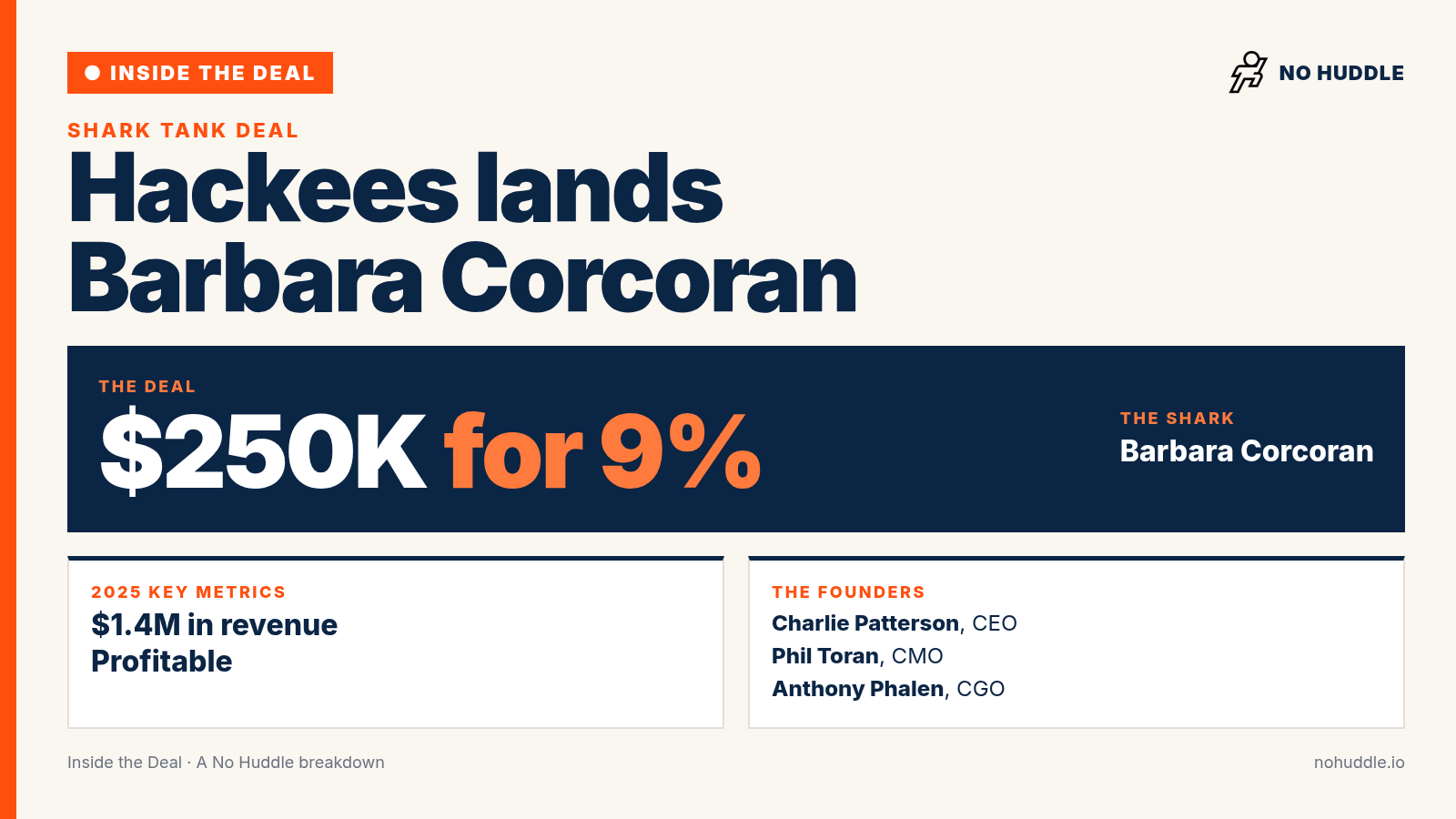
And on Wednesday night, that episode aired, with several sharks interested, two deals on the table and the Hackees team walking out of the tank with Barbara Corcoran as the latest investor on their cap table.
Hackees on Shark Tank is everything No Huddle stands for in one story. Sports forged a bond between three friends, and they came together as entrepreneurs to form a business that has steadily grown - all the way to the point they presented on national television.
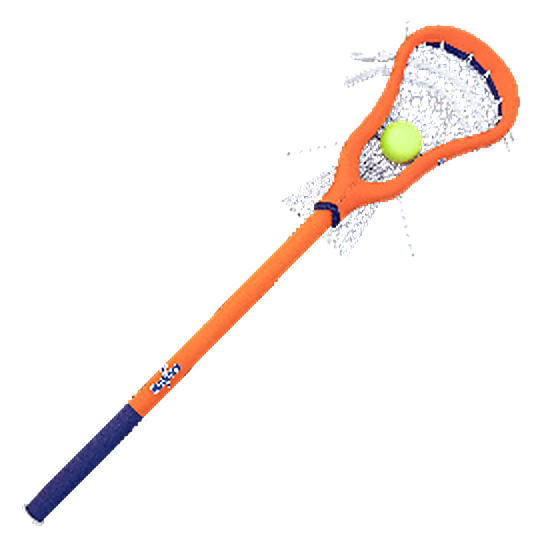
Hackees puts a full-sized, hand-strung lacrosse head on a flexible, foam-wrapped shaft with padding on the outside, moving the pads off the player and onto the stick. That makes real pickup lax possible in the backyard, at the beach or in the basement, for $39 a stick versus up to $800 for full gear. It sells to two markets at once: families buying packs like the Great White Shark Pack (4 sticks and a goal for $180), and PE teachers, parks and rec departments and youth leagues buying in bulk for under $40 a head. About 80% of sales come direct through hackeeslax.com, with the rest through Lacrosse Unlimited and independent stores. Revenue doubled every year for its first three years to $1.4M last year, the company is profitable with two full-time founders, and it’s in talks with the National Lacrosse League to partner on Unboxed, the league’s grow-the-game program.
As a born and raised New Englander, I’ve had lacrosse around me since my first days as an athlete. Because my skillset (slow, unathletic, preferred not to get hit… boy do I sound like a QB) didn’t match the vibe of the game, the closest I got to being a “lax guy” was having flow under my baseball hat.
It’s safe to say that a story like mine is becoming less common. Participation and interest in lacrosse have been on an upward trajectory for decades now.
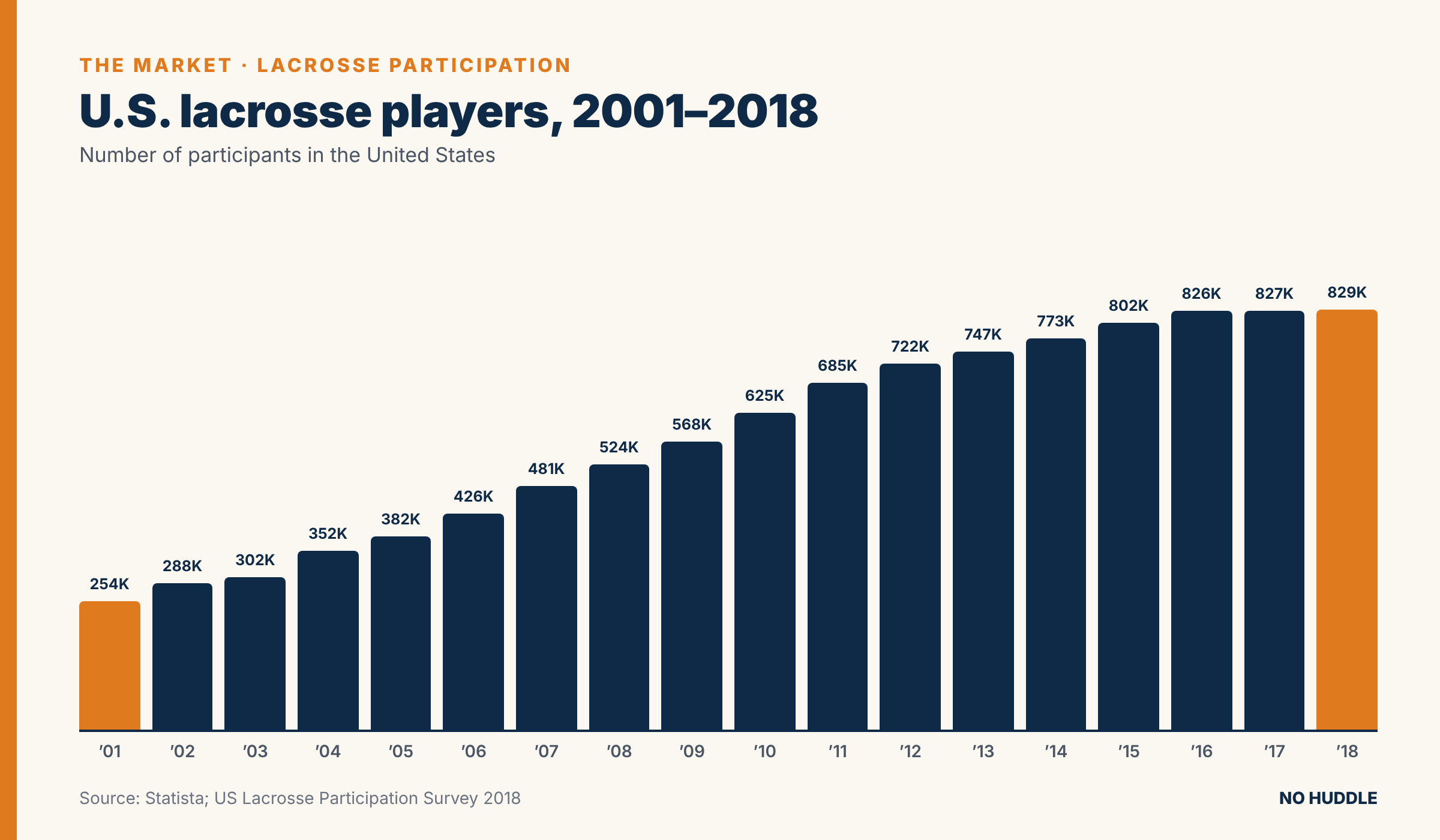
Source: Statista
The lacrosse pyramid continues to expand too - and fast.
At the high school level, there are more than 200,000 active lacrosse players, on roughly 6,700 boys’ and girls’ school teams. Things are just getting started though - only 24 states crown a high school state champion, so there’s still plenty of room to grow.
In college, lacrosse - both men’s and women’s - continues to crush. The Final Four on Memorial Day weekend is a mainstay of the sporting calendar, and players are growing their brands on and off the field to new heights. The map is getting bigger too. SMU will launch a Division I men’s lacrosse program that will begin play in the Atlantic Coast Conference in the spring of 2028. It will be the first Division I men’s college lacrosse program in Texas.
The Premier Lacrosse League (PLL) was founded in 2018 by Paul Rabil, one of the best lacrosse players ever, and his brother Mike. Paul had tried to work with, and then buy, Major League Lacrosse, the pro league that began in 2001. When that went nowhere, the Rabils started their own league, with backing from investors including CAA, Raine, the Chernin Group and Joe Tsai and a TV deal with NBC. The players followed quickly, with average salaries more than 4x what MLL paid, and in December 2020 MLL folded into the PLL.
Fast forward to June of this year: the PLL closed a $100 million Series E led by Ares and Joe Tsai, the largest capital raise in the history of professional lacrosse. ESPN, which first took an equity stake in 2025, invested again following its media rights extension through 2030. The league plans to start selling its eight teams to outside investors by 2028, and aims to expand to 16 teams over the next decade, each with individual ownership.
And then there’s LA28, where lacrosse returns as an Olympic medal sport for the first time in more than a century. The Games will feature men’s and women’s sixes, a fast-paced, high-scoring hybrid of box and field lacrosse with smaller rosters and shorter games.
Getting on Shark Tank is no click-to-apply process. 40,000+ entrepreneurs apply each season, with about 1,000 advancing to the next stage in the process. Of that group, 150 get the chance to pitch the sharks, and fewer than 100 actually make it on the air. Sometimes the entire process can take over a year.
Here’s the path Hackees took to Shark Tank and to an investment on the big screen:
- The application. Founders get in one of two ways: an online application, or an open casting call where each pitcher gets one minute to sell their product to the casting team.
- The tape. At some point you send in a video, usually 10 minutes long, featuring you and your business idea. A longtime casting producer puts it plainly: “Shark Tank is 50% about your business and product and 50% about you, the person behind your business.”
- This came naturally to the Hackees crew. Three best friends from when they were kids, building a business they were passionate about and loved.
- The vetting. The show’s producers screen each business before it’s accepted, but the Sharks have nothing to do with that process. Founders also agree to the rules: no prior contact with the Sharks or their teams, plus a “no-shop” agreement signed before filming, so nobody can use a TV deal to shop for a better offer.
- Each shark’s team also begins a light diligence process to clear what may cross their main hurdles of interest. A lot of homework is done before the entrepreneurs even walk in!
- The rehearsal. There is usually an in-studio rehearsal day for honing the all-important 90-second opening pitch, and it takes place exclusively in front of the show’s producers.
- Filming day. The average pitch takes about 45 minutes, and is cut down to the mini-segment full of drama that we tune in to.
The team spent countless hours crafting their pitch and practicing Q&A, taking turns playing the Sharks. But at the end of the day, they were best friends with a business they knew inside and out, and a passion that came from years of playing together and watching Hackees get more kids into the game. Phil ripping his pants off at the start of the pitch certainly helped set the tone too.
There’s more to this story, and the Hackees crew will talk through it when they join us on The Colosseum soon.
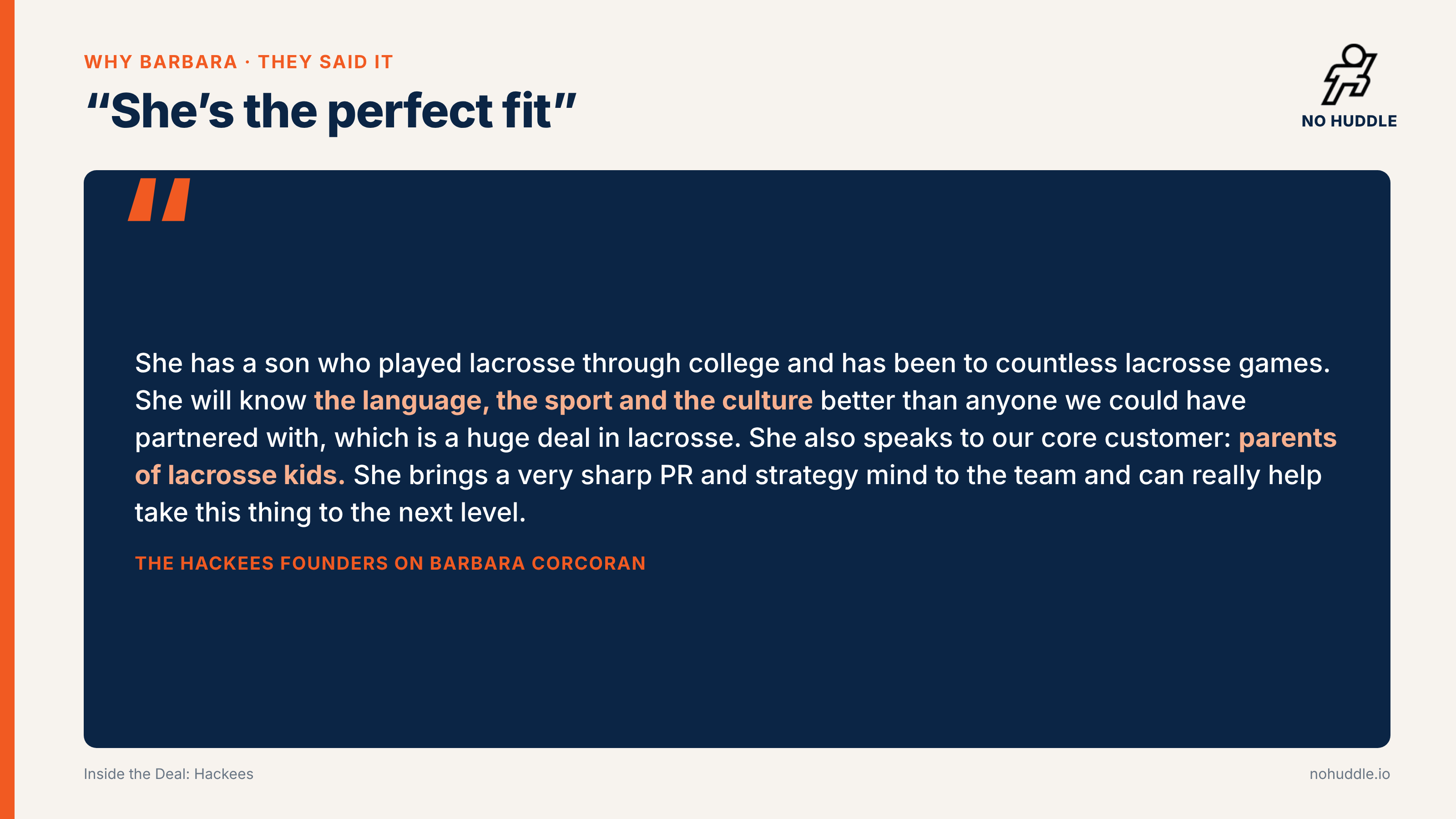
Why the Hackees crew is so excited to partner with Barbara:
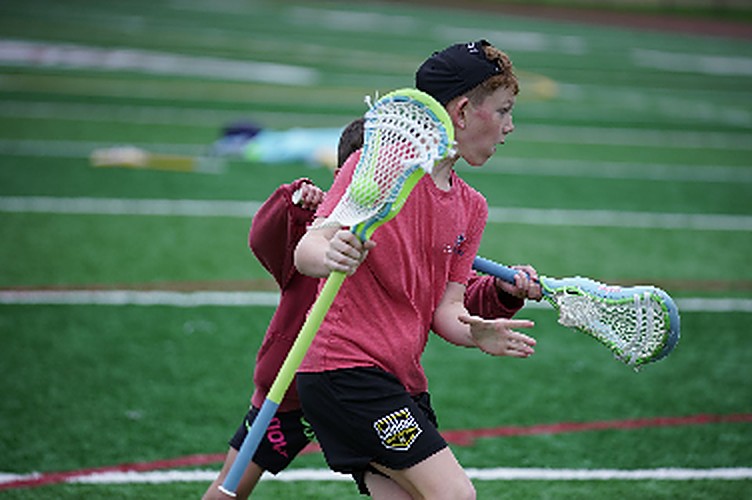
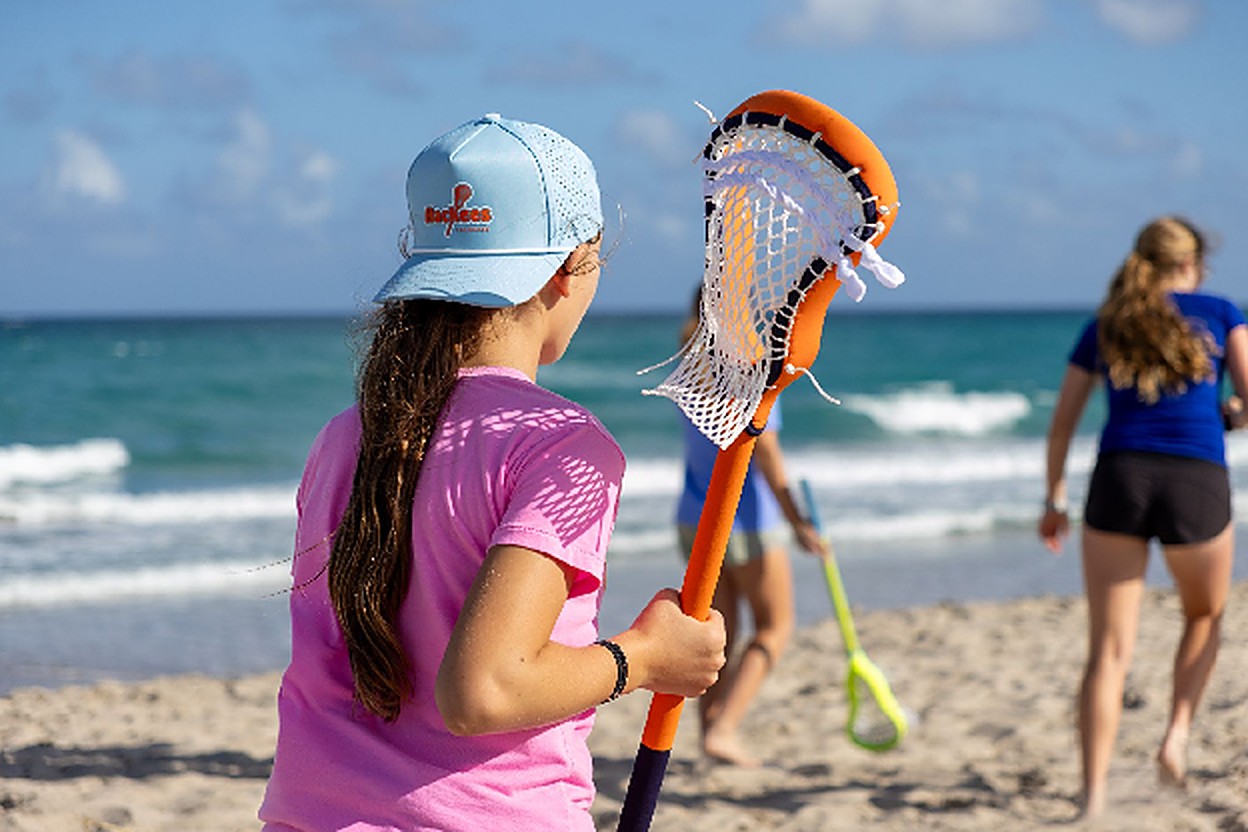
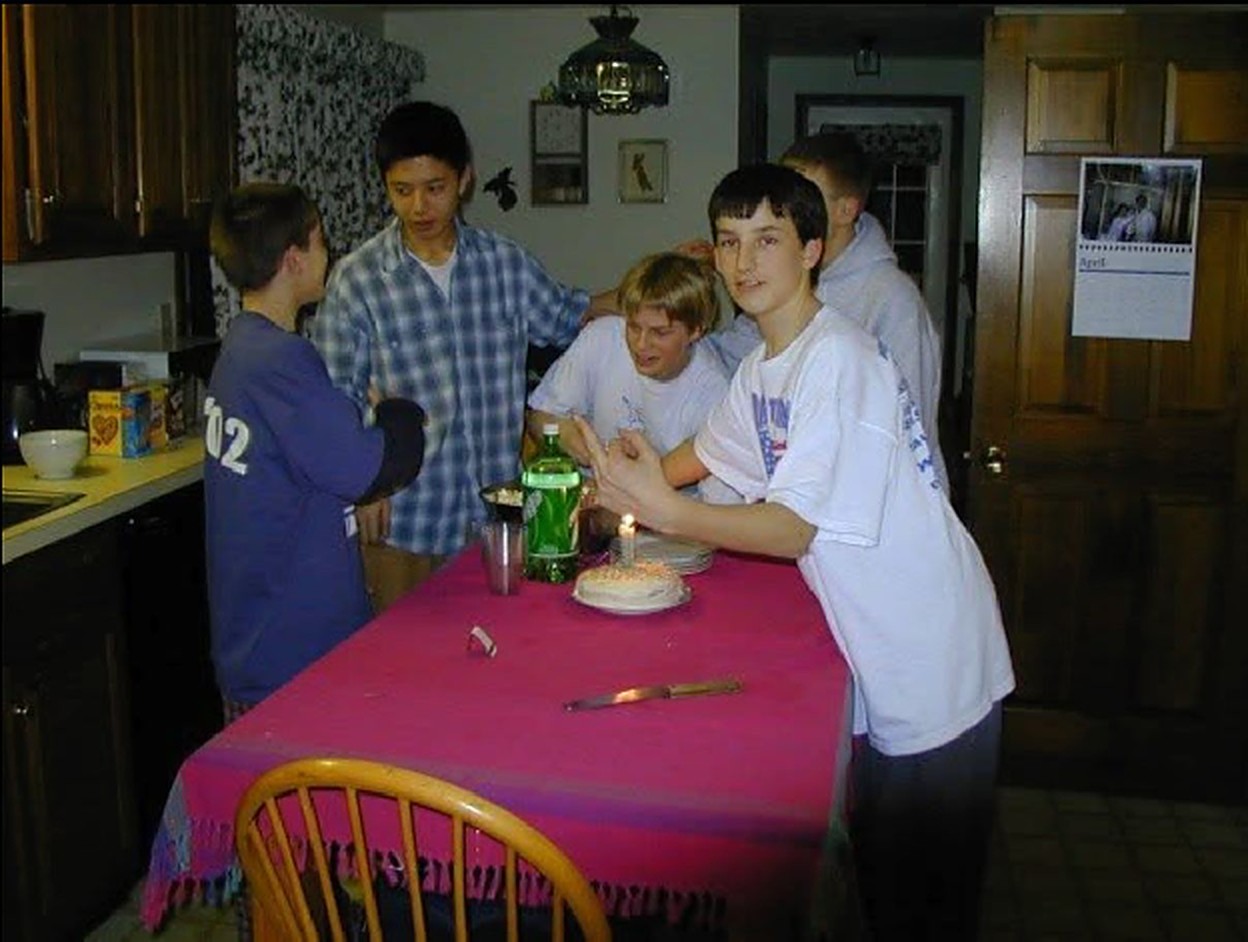
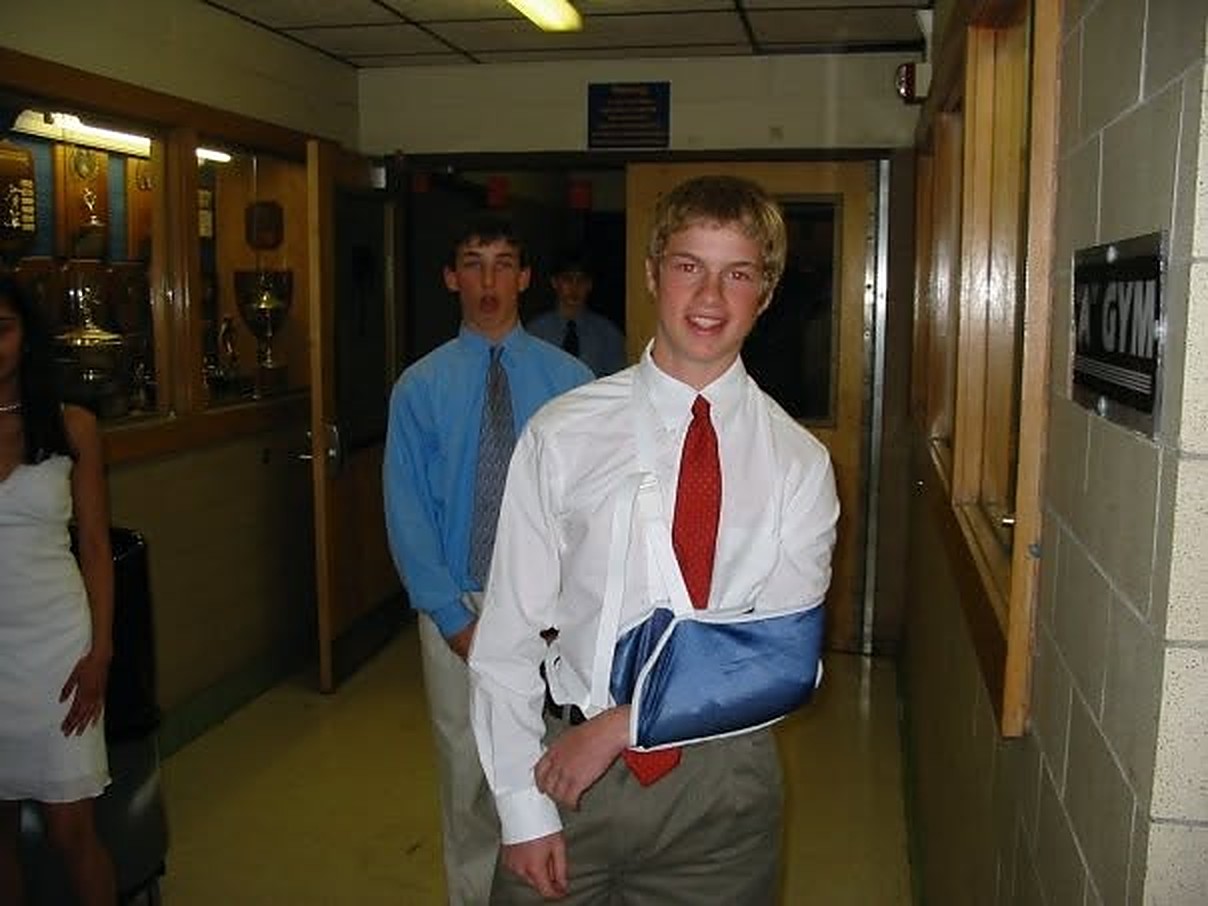
Charlie, Phil, and Anthony grew up together in Needham, and spent all their free time outside, playing every sport you can imagine from Wiffle to street hockey to miniball to the two-hand touch turned tackle football game. There were no cell phones, video games, Instagram or reasons to not just be having fun with their friends. They call those days “the best days of our lives.”
Then lacrosse took off around Boston, and they fell in love with it too. But there was no way to play it like everything else. You couldn’t grab a few sticks for a pickup game in gym class or after school without pads and a coach watching, and kids couldn’t even try the sport until their parents had paid for equipment and league fees.
Hackees is the game they wish they’d had: real lacrosse, padded sticks, no gear required. Kids can play it in the backyard or at the beach or in the driveway the same way they played everything else growing up.
“We never thought we’d be running a lacrosse company, but we love every minute of it and are so grateful that the response to our product has been so positive.”
During one of my first internships, a seasoned family office investor said to me: “There are two things people will always spend money on, no matter how smart the spend is: their kids and their pets.” That line has stuck with me, and it keeps proving true nearly a decade later.
So let’s take Hackees for what it is: the convergence of two big tailwinds - youth sports and lacrosse. The U.S. youth sports boom is real. The average family paid nearly $1,500 annually for one child’s sports experiences in 2024, and the industry as a whole reached $40 billion in annual revenue. Lacrosse is seeing outsized growth and interest on the road to LA28.
One of the biggest barriers to entry for youth sports, and lacrosse especially, is cost. Full lacrosse equipment can run up to $800 per player. A Hackees stick is $39. And the market they’re playing in is huge: the global lacrosse equipment market was valued at roughly $350 million in 2025. At $1.4M in revenue last year, Hackees has barely scratched it, and that’s before you count the backyard and beach games world where they can compete with the Spikeballs and Wiffle Balls.
About 80% of Hackees sales come through their own website, run by an extremely lean team. They doubled revenue every year for their first three years and they’re already profitable. That’s beyond impressive for a physical product with manufacturing, inventory and marketing spend (this isn’t a software biz!).
That’s why we’re very bullish. There’s no reason Hackees can’t keep doubling revenue, or better, with Barbara in their corner. Barbara brings reach with exactly the families they sell to, a lacrosse family of her own, a track record of taking small consumer brands national, and a clear interest in building something bigger than a niche lacrosse company. Add the schools and leagues buying in bulk, a possible NLL partnership, and lacrosse heading to LA28, and we’ll be watching this one closely. More when the guys join us on The Colosseum.
Grab a set at hackeeslax.com. And watch the episode on Hulu and Disney+.

No Huddle is for informational purposes only and is not financial or business advice.