

● OCTOBER 8, 2026
BREAKING: Inside Agentiq, Where Fans Can Invest Directly in Professional Athletes
|
||||||
|
||||||
|
||||||
|
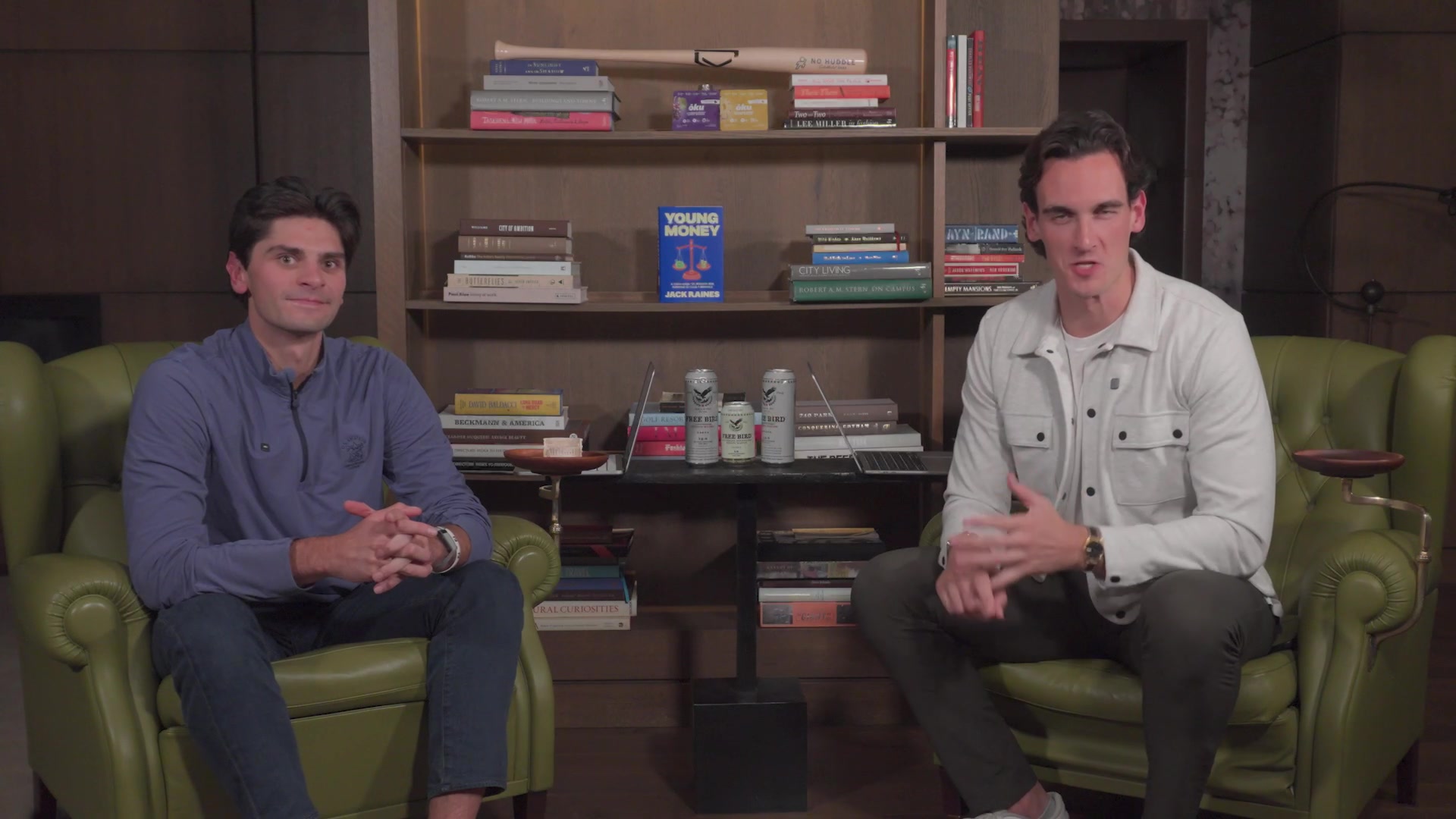
Who Pays for the Game? Ryan Field, Man City and Rivals' $500 Stars | The Colosseum Ep. 3
A new YouTube show from No Huddle on the deals moving the industry and the founders, operators, and companies building what comes next.
|
||||||
|
On the episode
|
||||||
| With Sam Foley, founder of No Huddle, and Joey Lindstrom, national play-by-play broadcaster. | ||||||
|
||||||
| A No Huddle and Wagon Media production. |

🎙 IN THE POCKET

How I am seeing the field across sports, media, entertainment, wellness and CPG
That line from JPMorgan's Kristin Lemkau at the Game Changers conference hit my feed and a few group chats this week. It traces to a 2015 NBER study: ~16% of players drafted between 1996 and 2003 were broke within 12 years of retiring. Was I shocked? Unfortunately, no.
I grew up in the 30 for 30 and social media era where athletes - or anybody with wealth for that matter - have the public closely watching any false move… and usually commenting on it. Bad crypto investment? There's probably an ad or tweet about it. Spend a lot of money on a 6-car garage and vintage Ferraris and then not make it to your next contract? That IG post is going to be viral. Head out on a boat with teammates the day before a playoff game? Well that's a lifelong meme. (Sorry Giants fans… had to).
The millionaire athlete going broke problem has been around as long as contracts have been. Antoine Walker earned ~$108 million over 13 NBA seasons, filed for bankruptcy in 2010, and said it himself: "The money came so fast without the education." Vince Young went third overall in 2006 with a $26 million guaranteed deal and a few years later was suing his former agent and financial planner, claiming at least $5.5 million was misappropriated.
What happens when you ask an athlete what they are going to do with the money from their first endorsement contract or deal? More and more now say "invest" or "save" it, and that's progress. But that first big number is often a signing bonus - a lump sum that lands before the first game does, and nobody hands over a plan with it. The college version is just in its early days, and there's so much white space for resources for these student-athletes stepping into what could and should be life-changing money. I wrote about it in Volume 32 with Final Whistle Wealth, and I still think it gets worse before it gets better.
Athletes do have something most people with a lump sum don't always have: premium access to an ecosystem of other high net worth folks, business propositions and the ability to allocate their wealth in different ways from a very young age. We're seeing the pattern shift toward ownership in real time. Kylian Mbappé walked away from Nike after ~20 years for an equity stake in On (which we got into on Episode 2 of The Colosseum). Roger Federer took equity in On back in 2019. Kobe Bryant put roughly $6 million into BodyArmor in 2014, and the stake was reportedly worth $400 million when Coca-Cola bought the company.
More athletes are building wealth by “owning” pieces of things, and the consumer side is moving in a similar direction. On the investing side, there's a new wave of team-index products I'll be digging into soon. And between sportsbooks, prediction markets and fantasy, there are more ways to bet on a sports-related event than ever before. But that comes at a cost - the general public is falling into the trap of associating betting with investing, when they are very different things. An investment is a stake in something that can produce cash flows over time. A bet looks great on a Sunday morning when you see how much the 10-leg parlay can pay out and you picture being a millionaire by the time the 4pm slate kicks off, but Gen Z sees them as the same. In Betterment's 2026 survey, 52% of Gen Z investors said they'd moved money meant for investing into sports betting over the past year, and 26% said they treat betting as part of their long-term financial strategy. That is scary stuff, and I dove deeper there in Volume 30 with LionStrike.
Meanwhile, the clock is the problem for athletes. The Wall Street Journal analysis found the average NFL career shrank from 4.99 years to 2.66 between 2008 and 2014. The oldest line in finance is that a dollar today is worth more than a dollar tomorrow. For an athlete, the money that arrives at the start of your career has decades to pay out and/or compound, but that next contract isn’t guaranteed. Time cuts both ways, though. The Mets deferred the $5.9 million they owed Bobby Bonilla at 8% interest, and he's collected about $1.19 million every July 1 since 2011. The deals that cost you are the ones that take a slice of your earnings with no end date, because they keep costing you long after the paychecks stop.
Thematically, we have three movements now coming to a crossroads.
Athletes want more financial flexibility and the ability to grow their net worths as much as they can, as careers get shorter.
Consumers are willing to deploy their own capital in different forms, and have certainly taken a liking to spending their dollars on sports - whether that's going to a game, buying merchandise, betting, or investing in the ways offered.
Savvy capital partners are seeing both, and thinking about how they can allow further entrants into this sporting ecosystem down to the retail level - though if you're involved or an LP in RedBird, Arctos, Apollo Sports Capital and others of that world… I'd love to talk!
That's the idea behind Agentiq: fans buy into a share of an athlete's future on-field earnings, the athlete gets capital up front, and a market where those shares can trade lets both sides win over the long run.
No Huddle got an early look at Agentiq as they emerge from stealth… more below 👇
📺 THE WATCH LIST

A mini investment memo on the stars of tomorrow
The Company: Agentiq Sports
The Business in a tweet: Agentiq is the stock market for professional athletes. Think Robinhood, but instead of buying shares in companies, fans buy a slice of an athlete's future on-field earnings, starting at $100, through SEC-regulated offerings tied to real contracts.
The 101:
Industry: Sports Technology / Fan Finance / Athlete Securities
Headquarters: New York, NY
Year Founded: 2025
Founding Team/Current Leadership:
Zach Kurtz - Co-Founder & CEO. Played D1 baseball at the University of Richmond, spent his career building across the startup world. Also started LV Lumber, a wood bat company used by dozens of pro players.
Reuben Abraham - Co-Founder & CTO. Employee #10 at Pave, the compensation platform that hit a $1.6B valuation in 2022, and a former NerdWallet engineer. Played for the UAE national cricket team.
Employees: Nearing 5 FTEs and hiring 👀
Fundraising Status:
Seed round closed, led by Defy and the owners of two major European football clubs

If you’re interested in learning more or meeting the team, respond to this email or reach out to [email protected].
Business Model:
A fee on each athlete offering and on distributions to investors.
Agentiq charges a 4% negotiation fee on its initial offering, with total upfront costs of approximately 8% once broker-dealer, payment and other charges are included. It also charges 2.5% of investor distributions (for example, $2.50 on every $100 paid back to investors).
By comparison, Finlete currently describes its model as taking 25% of capital raised in athlete offerings and 10% of receipts from athlete earnings. The exact fee burden depends on the offering and the amount to which each fee applies.
Agentiq’s business is anchored around when the athlete's earnings flow through, not just when an offering closes.
A fee on secondary market bids and asks once that market exists.

Traction:
5 athletes signed: Justin Martinez (Diamondbacks closer), Hunter Dobbins (Cardinals SP), Esmerlyn Valdez (Pirates OF, MLB debut this season), Ronny Cruz (Nationals infield prospect) and Carlos Virahonda (Diamondbacks catching prospect)
Offering sizes run from a $353K maximum for Martinez to $2.8M for Valdez
Pipeline of 50+ athletes across MLB/NFL/NBA. Active conversations with sports agencies and wealth managers that each represent dozens of possible clients.
Form 1-A qualified by the SEC with offerings live on Agentiq’s website and app
Launch: web platform live, mobile app in final App Store review

Deep Dive:
Agentiq sells fans a share of a player's career earnings the same way a crowdfunding site like WeFunder sells a share of a startup. Each athlete gets his own separate legal entity, called a series, so a fan buys into one player at a time. The athlete receives cash up front, the series is entitled to a percentage of his future on-field earnings (10% in the Cruz deal) and fans who buy units receive distributions when the athlete gets paid. Non-accredited investors can put in up to 10% of the greater of their income or net worth.
The earnings “definition”. It covers salary, bonuses, and prize money, and excludes endorsements.
The term. It runs 25 years, or ends two years after he retires if that comes first.
The pitch to both sides:
Athletes = upfront cash to invest on better terms than the private funds
Fans = a real security with cash flows attached (where the alternatives are a parlay, a prediction market contract or a trading card)

Pros:
Innovative asset class that has had traction and success before. Private funds have signed 10% of MLB rosters and are firmly beating the market in this asset class - not just in the MLB either. It also catches the combination of four major themes: collectibles, fandom, gaming, professional athletes looking for financial flexibility and optionality
The initial group of players is a great start - some landmark names help alleviate the biggest risk in the category: a player never making it to the pros. Sportico reported Big League Advantage's (BLA) early book as roughly 100 players who made the big leagues out of 400+ signed. Three of Agentiq's five are already in the majors, and Cruz is a top prospect at 20.
Each athlete is a securities offering with an outside audit. A fan buying a unit gets all of the same documentation and legitimacy that they would with any other financial investment, which a pack of cards or a fantasy lineup doesn't come with.
Terms are priced to retail hurdles instead of fund hurdles. The company's math is that private funds in this category sometimes even run a 3/30 structure (3% management fee and 30% carry) versus the 2/20 standard due to the exclusivity and performance to date. Covering that fee load means pricing athlete deals richer for the fund. Retail capital doesn't carry it, which can translate into better terms for the athlete.
A planned exit for the athlete. I think this one is very underrated. Agentiq’s plan is a secondary market where players can buy shares back. This makes players a lot like companies, which can issue tenders for shares or share buyback programs for further liquidity. In the Tatis example, he could have bought his shares back long before his $340M extension.
A valuation engine and a shareholder base that understand athletes as assets. The company's model was built by former MLB and soccer front office staff and runs Monte Carlo simulations across 100+ variables.
Cons:
Early days! And a tough sector to crack into: Recent retail athlete-finance offerings have struggled to reach their targets: Vestible’s Baron Browning IPO closed with $653,400 raised (65,340 shares at $10), P.J. Washington’s SportBLX/WeFunder campaign sought $1.07 million but peaked at just $12,700 in commitments, and Finlete’s Emmanuel Clase offering closed after raising more than $315,000 against a $3.6 million maximum. Clase has been in the recent news for some other reasons as well…
The athlete is paid before the fans have filled the orderbook: Agentiq pays athletes before their offerings are fully subscribed by fans, fronting the cash from its own balance sheet. That ties up capital until investors buy in, potentially limiting how quickly it can sign new athletes - even if athlete demand is strong.
Per-athlete regulatory cost. Each athlete needs its own series and SEC qualification, which adds time and legal spend to every new signing.
Single-athlete concentration: This is not a diversified bet or ETF, it’s an investment into a single player and their career outcomes.
Liquidity: There is no market yet to trade these assets. Agentiq will need to create a pool of buyers and sellers to drive value.
Comparables:

Agentiq Differentiator: Agentiq is the only name in this comp set pairing a venture-backed consumer app with active big leaguers, a published fee schedule, a public databank of athlete deal terms and a buyback path for the player.
Category precedents: Fantex previously offered athlete-linked tracking stocks; Vestible brought future-earnings offerings to retail investors, including Baron Browning’s 2024 deal. Agentiq is competing on economics and execution within an existing category - not inventing athlete investing.

📶 THE SIGNAL — NO HUDDLE'S TAKE
The most visible earlier attempts to let retail fans invest in athletes either shut down, never achieved meaningful retail scale, or stayed in private capital. Agentiq thinks the timing is finally right to take this mainstream.
Fantex went first. It launched in 2013 and sold tracking stock tied to an athlete's brand income. Fantex signed dozens of athletes, completed six athlete-linked IPOs totaling $25.8M, which averages out to roughly $4.3 million a deal, and closed to individual investors in August 2016. Forbes's Mike Ozanian (who is now at CNBC) argued at the time that the structure left public shareholders with the thinnest slice.
With Fantex, fans bought athlete-specific tracking stock issued by Fantex - not a direct stake in the athlete’s earnings. The shares were tied to the economic performance of the athlete’s broader brand income, which could include both playing compensation and off-field revenue, with dividends paid by Fantex under the offering’s terms.
On the flip side, Big League Advantage took the private capital route. By Sportico’s count, it had signed more than 400 players by 2022, but it never sold to fans. It’s also part of the reason athletes are wary of these deals. Padres superstar Fernando Tatis Jr. took $2 million as a teenager in exchange for 10% of his future earnings. After Tatis blossomed into one of MLB’s best players and signed a 14-year, $340 million extension, the deal’s projected value to BLA is roughly $34 million from that contract alone. Tatis challenged the agreement in court, but lost in arbitration. This May, a San Diego judge ruled against him again, and he has said he'll appeal.
With Agentiq, fans buy units in a separate, athlete-specific Series LLC rather than shares in Agentiq itself. In the Ronny Cruz offering, that series is entitled to up to 10% of his future on-field baseball earnings. Investor distributions, if any, are paid from the series’ available cash flow after fees, expenses, taxes, and reserves.
So why now? Agentiq is emerging from stealth at the intersection of four megatrends:
Collectibles: Fans already pay up to own a piece of a player before everyone else believes in him. We’re seeing records shattered for cards - check out the story behind New England’s own Cooper Flagg’s rookie card selling for over $8M. I covered this trend way back in Volume 5 with Cllct. A trading card or collectible captures the early-believer story, but its price depends on the next buyer wanting it. A share of a player's earnings keeps the same story, but adds a following and a payout.
Fandom: Fans are the sweat equity behind every league. They watch the games, buy the merch, spend on tickets and concessions, and they've never held any of the upside. Sportico's 2026 valuations have the average NFL franchise up 31% in a year. At $100, Agentiq is pitching something closer to investable fan ownership than the symbolic ownership models fans know (h/t to Packer nation).
Gaming: Betting, prediction markets and fantasy volumes keep climbing, and football is back. Football season has turned prediction markets into a multi-billion-dollar weekly sports product. Eight leading platforms processed $3.12 billion in trading on the first Sunday of NFL action, while sports-only exchange Novig generated $1.14 billion in notional volume over the first three weeks of the season. An Agentiq unit asks for the same behavior, putting money behind a belief about a player, and puts a regulated, illiquid security with cash flows behind it. It’s safe to say that consumers have been trained to put money behind a sports outcome inside an app. [Reminder: This is not financial advice]
Athletes may want financial flexibility: Careers are short and income is lumpy. A widely cited study put the average MLB career at 5.6 years, and the CBA expires December 1 with a lockout widely expected. A player who sees a work stoppage coming has a reason to want cash now, and a reason to want better terms than a private fund offers. Agentiq’s read is that a lockout sends more athletes looking for up-front money. The player also picks up a few thousand people with a reason to follow and promote him, since the plan is to sell shareholders autographs, drops and tickets.
Each of these trends has already produced companies, and some big winners. Agentiq touches all four with a regulated security underneath, which is why I think mass adoption is possible here in a way it wasn't for Fantex in 2013.
Athletes are now also seen as distribution channels. A player promoting his own series to his followers is the cheapest marketing in this category, and GameStock's creator-led playbook in Volume 25 points the same direction. A brand that already sponsors an athlete could pitch its customers on backing him too.
The other reason I take this seriously is how the team has operated. The regulatory review ran in private while athletes were being signed. By launch week there are five series, an app in App Store review and a seed round from Defy and the owners of two European clubs, all assembled quietly before most of the category knew the company existed. Zach played D1 baseball, owns a bat company whose customers are pro players and has spent his career in startups. Reuben was employee #10 at Pave and an engineer at NerdWallet. One founder has the clubhouse access and the other built the part that moves the money. Getting a player to sell a slice of his future is a trust sale, and I think it's very hard to do from outside the sport.
Before the enthusiasm gets ahead of us, here's what Agentiq can't fix. It can't diversify a fan out of single-athlete risk until baskets exist. It can't shorten a lockout. If one runs into the 2027 season, the players on big-league rosters stop getting paid, and distributions stop with them. And it can't take an athlete's conduct out of the equation. Finlete's Emmanuel Clase, who has pleaded not guilty to charges that he rigged pitches for bettors, has been on unpaid leave since March.
Agentiq's underlying bet is that a fan who will put $25 on a parlay will put $100 into a share of a player's career if the share pays out. The first few weeks of investor demand in the Martinez and Cruz offerings are the first test of it. Time will tell if that is true. I’ll be watching closely.
If you’re interested in learning more, or meeting the team, respond to this email or reach out to [email protected].
No Huddle is for informational purposes only and is not financial or business advice. The content in this newsletter does not represent the opinions of any other person, business, entity, or sponsor.
FROM THE ARCHIVE
Volume 32 on Final Whistle Wealth looked at the athlete side of this story. The first big payment often lands before anyone hands over a plan. Agentiq gives athletes a new way to take cash up front, and the same planning questions come with it.
Enjoyed this Issue?
Subscribe to No Huddle for future breakdowns at the intersection of sports, business, capital, founders, and operators.
Know a company we should be paying attention to?
If there's a founder, startup, or sports business worth watching — send it our way.
Sports × Business × Capital.
𝕏
in
@
Founder signals, alumni momentum, and the people shaping what is next. |
READ
Latest Volume
Archive
Alumni
|
ABOUT
Our Standards
Partnerships
Subscribe
|
||
|
||||